
Employee well-being is critical to an organization because it directly influences operational resilience, labor costs, and long-term financial performance. When a workforce operates under optimal conditions of physical, psychological, and social health, businesses experience measurable reductions in voluntary employee turnover, lower rates of absenteeism, and heightened employee engagement. Cultivating an organizational culture that intentionally protects and enhances employee well-being acts as a defensive shield against burnout while simultaneously driving organizational efficiency and innovation.
The Economic Imperative of Workplace Wellness
The financial health of an enterprise is intrinsically tied to the collective energy and stability of its personnel. For decades, corporate investments in corporate health initiatives were viewed merely as secondary benefits or compliance-driven expenditures. However, modern corporate finance structures recognize that human capital risk is one of the most volatile variables in a balance sheet. The costs associated with ignoring the health of a workforce manifest in distinct organizational liabilities: direct healthcare expenses, productivity losses stemming from absenteeism, and the subtle, corrosive impact of presenteeism.
Presenteeism, the phenomenon of workers physically showing up to work while disengaged, unwell, or mentally checked out, costs companies significantly more than outright absences. When individuals operate under chronic cognitive exhaustion, their decision-making capabilities degrade, error rates climb, and project timelines stall. This dynamic shifts workplace wellness initiatives from a superficial cultural accessory into a core strategic necessity for loss prevention.
|
Economic Variable |
Unmanaged Workplace Strain |
Optimized Institutional Health |
|
Direct Healthcare Premiums |
Exponential year-over-year increases driven by chronic illnesses. |
Controlled, predictable premium adjustments due to preventive care. |
|
Voluntary Attrition Costs |
Equivalent to 1.5 to 2.0 times the departing employee's annual salary. |
High retention rates among specialized, high-performing personnel. |
|
Operational Efficiency |
Decelerated project delivery timelines and higher product error rates. |
Consistently high quality of output and predictable workflows. |
Deconstructing the Psychological and Behavioral Drivers
To construct a workspace where individuals thrive, leadership must look past superficial perks like catered lunches or office game rooms. True organizational stability requires structural changes that alter how daily responsibilities are assigned, processed, and recognized. Sustainable corporate health rests upon distinct psychological frameworks, specifically the Job Demands-Resources (JD-R) model.
According to the JD-R model, strain occurs when the operational demands of a role consistently outpace the structural resources provided to execute that role. Demands include intense time pressures, toxic workplace dynamics, and ambiguous role expectations. Resources encompass institutional support, professional autonomy, constructive feedback mechanisms, and adequate operational tools.
When organizations deliberately increase resources rather than endlessly scaling up demands, workers display higher levels of intrinsic motivation. This intrinsic motivation translates directly into cognitive endurance and creative problem-solving. Conversely, when resource depletion occurs, the workforce slips into a state of chronic exhaustion, which ultimately fractures institutional trust and operational continuity.
Quantifiable Metrics and Global Benchmarks
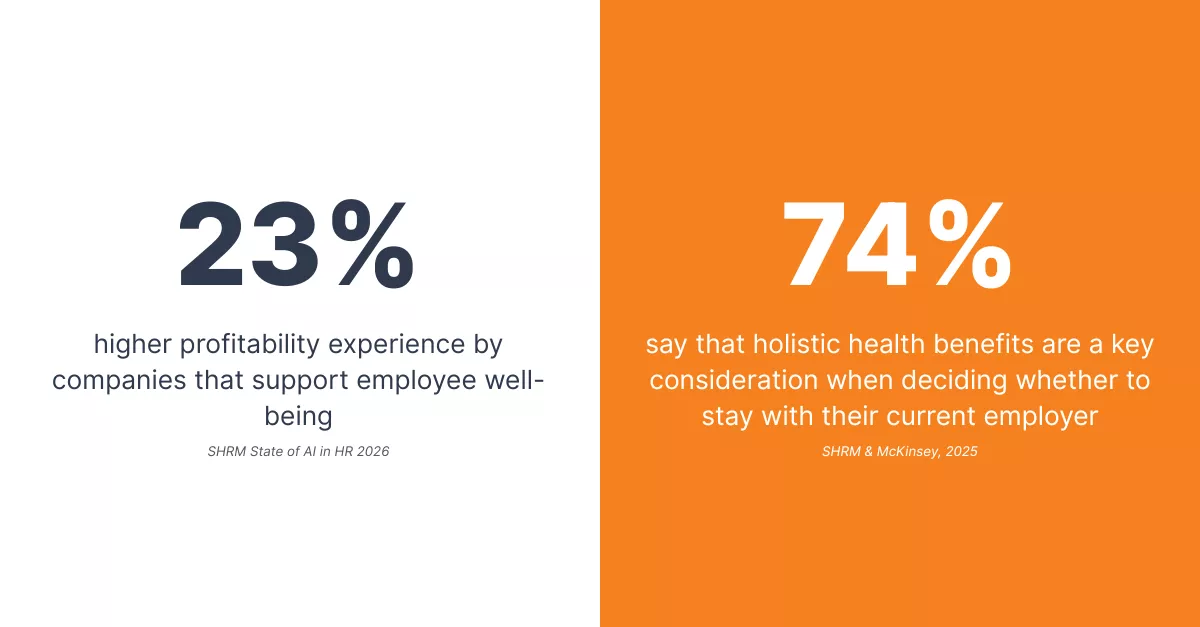
The business case for structural investment in corporate health is validated by extensive longitudinal studies across various industries. Global workforce research indicates a stark correlation between organizational care for personnel and bottom-line business metrics.
According to a comprehensive global workforce analysis by the Gallup State of the Global Workplace Report, organizations that score in the top quartile for actively supporting employee well-being experience a 23% higher profitability compared to business units in the bottom quartile. This variance demonstrates that prioritizing the health of personnel is not a soft cultural preference but a definitive competitive advantage.
Furthermore, ignoring these metrics introduces immediate financial risk. A stark example of this risk is captured in research by the American Psychological Association, which reveals that 77% of workers reported experiencing work-related stress in the month prior to the study, with 57% indicating that this stress caused negative impacts like cognitive weariness and emotional exhaustion.
When over half of an organization's labor force operates under debilitating cognitive strain, systemic operational failures become inevitable. The financial drag caused by this widespread cognitive fatigue shows up clearly in burnout, rising turnover rates, and higher customer churn, as stressed workers struggle to maintain product standards or provide quality client service.
The Interconnection of Modern Benefits and Workforce Retention
The structural architecture of a competitive benefits package has fundamentally evolved. Modern labor markets require comprehensive frameworks that prioritize holistic health as a primary retention tool. Workers are increasingly evaluating prospective employers based on their structural commitments to mental health access, flexible working conditions, and psychological safety.
According to the comprehensive findings within the MetLife U.S. Employee Benefit Trends Study, 74% of employees state that holistic health benefits are a key consideration when deciding whether to stay with their current employer or pursue a new role. This data point highlights how health initiatives serve as an essential mechanism for retaining top talent in a highly competitive market.
When companies design benefits packages that proactively manage burnout, they create an environment that minimizes voluntary turnover. Retention is not merely about keeping headcounts stable; it is about preserving institutional knowledge, maintaining client continuity, and avoiding the high costs of recruiting and onboarding new staff.
Systemic Pillars of Institutional Health
To establish an environment where human capital is sustained over multiple fiscal years, an enterprise must address five foundational pillars: physical health, mental health, professional development, social safety, and financial literacy.
1. The Physical Environment and Ergonomics
The physical conditions in which a workforce operates set a fundamental baseline for overall productivity. Poor ergonomics, inadequate lighting, and relentless, uninterrupted shift schedules cause physical fatigue and chronic repetitive strain injuries. Corporate health strategies should integrate ergonomic workspaces, mandatory rest periods, and health-conscious facility designs. Making these physical adjustments helps prevent long-term medical claims and keeps daily energy levels high.
2. Mental Health and Psychological Infrastructure
Providing a corporate subscription to a meditation app is insufficient if the underlying corporate culture depends on unrealistic workloads and round-the-clock digital availability. True mental health infrastructure requires establishing psychological safety. Personnel must feel secure sharing operational concerns, reporting errors, or requesting assistance without fearing professional retaliation or reputational damage.
3. Professional Autonomy and Role Clarity
Ambiguity is a primary driver of workplace anxiety. When an individual is unsure how their performance is measured or lacks clear boundaries for their role, their cognitive load increases exponentially. Organizations can alleviate this pressure by instituting regular, transparent role reviews and granting employees the autonomy to execute tasks in ways that fit their individual workflows.
4. Social Integration and Collaboration Architecture
Humans are inherently social creatures, and the workplace constitutes a significant portion of an individual’s social ecosystem. When corporate systems encourage cutthroat competition rather than collaborative success, the resulting isolation degrades performance. Building cooperative structures, cross-departmental peer groups, and mutual support systems ensures that workers feel connected to a larger collective purpose.
5. Financial Wellness and Planning Literacy
Financial stress directly drains cognitive energy during the workday. Personnel dealing with consumer debt, housing instability, or inadequate retirement planning cannot fully focus on complex tasks. Offering financial planning resources, clear paths for compensation growth, and transparent retirement matches helps reduce this background anxiety, enabling workers to focus entirely on their core responsibilities.
Analyzing the Return on Investment (ROI) of Wellness Strategies
Skeptical corporate leaders often demand rigorous quantitative proof before allocating capital to workforce health initiatives. Fortunately, the financial metrics supporting these investments are well-documented. When analyzing the return on investment for health strategies, finance teams must look at both direct and indirect cost savings.
Direct savings are visible in lowered health insurance premiums and fewer workers' compensation claims. Indirect savings, while harder to track on a standard ledger, have a massive impact on overall corporate profitability. These include reduced training costs because of higher employee retention, lower temporary staffing fees to cover absences, and increased output per labor hour.
|
Financial Benefit Category |
Direct Measurable Impact |
Strategic Organizational Result |
|
Healthcare Cost Mitigation |
Lower corporate insurance claims. |
Redirection of capital to core R&D. |
|
Absenteeism Reduction |
Fewer missed shifts and unworked hours. |
Predictable production schedules. |
|
Enhanced Employer Brand |
Organic talent acquisition through positive word-of-mouth. |
Decreased reliance on expensive recruitment firms. |
To illustrate the financial impact of absenteeism, a look at international workforce trends reveals deep systemic issues. According to data published by the UK Office for National Statistics (ONS) Sickness Absence Report, an estimated 185.6 million working days were lost due to sickness or injury in the UK economy alone during recent reporting cycles, representing a massive loss in national productivity. For an individual company, this national statistic translates to empty desks, fragmented project tracking, and overworked backup staff who must pick up the slack.
Overcoming Structural Burnout Through Systemic Change
Burnout is not an individual failing; it is an institutional issue. When an organization treats burnout as a personal problem to be solved with stress-management workshops, it shifts the responsibility away from the broken corporate systems causing the issue. Lasting changes require re-evaluating core operational habits, communication norms, and how resources are assigned.
Rethinking Communication Rules
The rise of digital collaboration tools has blurred the lines between professional availability and personal time. When workers receive late-night emails or urgent weekend messages, their sympathetic nervous system stays activated, preventing true recovery. Organizations can address this by implementing clear guidelines around off-hours communication, explicitly stating that personnel are not expected to read or reply to messages outside of standard working hours.
Aligning Staffing Models with True Workloads
Chronic understaffing is a major driver of corporate exhaustion. When a company keeps headcounts artificially low to reduce immediate labor costs, it places a heavy, unsustainable burden on the remaining staff. While this approach might look profitable in the short term, the long-term results are costly: high turnover, onboarding expenses for replacement workers, and a decline in product quality.
Developing Adaptive Frameworks for Distributed Workforces
The shift toward remote and hybrid work models has changed the relationship between companies and their employees. While distributed work offers flexibility and removes stressful daily commutes, it also introduces challenges like social isolation, blurred boundaries between home and work, and digital fatigue.
To maintain workforce cohesion and health across different locations, companies must move away from old, presence-based management styles. Evaluating workers based on physical desk time must be replaced by clear, output-based performance metrics. This shift gives remote workers the freedom to structure their days around their personal lives, reducing stress and increasing focus during working hours.
Additionally, companies should provide remote teams with proper home-office equipment allowances. Ensuring remote staff have ergonomic chairs, high-speed internet connections, and proper computing setups prevents physical strain and reduces technical frustrations that disrupt daily workflows.
Data-Driven Management and Ethical Health Tracking
To build responsive corporate health initiatives, companies must continuously collect and analyze relevant operational data. Relying on annual engagement surveys is no longer sufficient; these surveys often provide outdated information long after a cultural issue has already driven top talent to leave.
Instead, companies should use continuous feedback loops, such as brief monthly pulse surveys, anonymous feedback channels, and detailed exit interviews. Tracking operational metrics like vacation time utilization, average overtime hours, and short-term disability claims helps leadership identify signs of team burnout before it results in mass resignations.
|
Analytical Metric |
Early Warning Indicator |
Proactive Management Action |
|
Unused Paid Time Off (PTO) |
Potential fear of taking leave or systemic understaffing. |
Leaders model taking time off; review team workloads. |
|
Surging Overtime Hours |
Processes are inefficient, or resource demands are too high. |
Hire additional staff; automate repetitive tasks. |
|
Declining Engagement Scores |
Fractured institutional trust or poor management. |
Targeted leadership training; run transparent feedback sessions. |
However, collecting this data requires strict ethical boundaries and a commitment to privacy. Personnel must be entirely confident that their survey responses and health data are aggregated and fully anonymized. If employees worry that sharing feedback or mental health challenges could negatively impact their performance reviews or career advancement, they will hide their struggles, cutting off management from the very insights needed to fix systemic issues.
Cultivating a Sustainable Organization for the Future
The long-term survival of an enterprise depends on its ability to sustain its human capital over decades. Companies that treat their workforce as an expendable resource to be used up and replaced will find themselves struggling in modern talent markets. High turnover rates damage an employer's reputation, making it increasingly difficult to attract specialized talent.
Conversely, companies that build a culture of sustainability find that their investments pay off across all areas of operation. A healthy, supported workforce is inherently more adaptable, resilient during economic downturns, and open to driving corporate innovation. When workers feel safe, valued, and properly supported, they can dedicate their full creative and intellectual energy to helping the organization grow.
Ultimately, prioritizing employee well-being is a defining feature of well-managed, forward-looking companies. True organizational excellence is achieved when a business aligns its commercial goals with the fundamental human needs of the people executing its vision. By investing in its workforce's health, an enterprise secures its operational capacity, builds long-term resilience, and creates a sustainable path for future success.